Early flights have a special talent for raising your blood pressure. The parking shuttle’s late, the security line curls around the corner, and your gate is the farthest one in the building.
A simple airport travel checklist lowers stress because it removes small decisions. You already know what’s in your bag, where your documents are, and what you’ll grab first at security. That matters even more when you’re traveling solo or solo on a group tour.
After 45, your needs can shift in quiet ways. Dry eyes show up fast in cabin air. Joints complain if you carry the wrong bag. Temperature swings feel stronger, and bathroom timing becomes a real strategy. This checklist covers comfort and confidence without turning your carry-on into a suitcase on your shoulder.
If you are an experienced traveler, you have a streamlined process for airport day. This targets newer solo travelers more, although you all may find value in this.
The airport travel checklist non-negotiables: documents, money, and your phone setup before you leave home
Think of this as your “green light” list. If these basics are handled, almost everything else is fixable.
Do this the night before:
- Put your ID and payment cards in the same place you’ll use at the airport (no last-minute switching).
- Charge your phone and power bank.
- Screenshot or save your boarding pass for offline access.
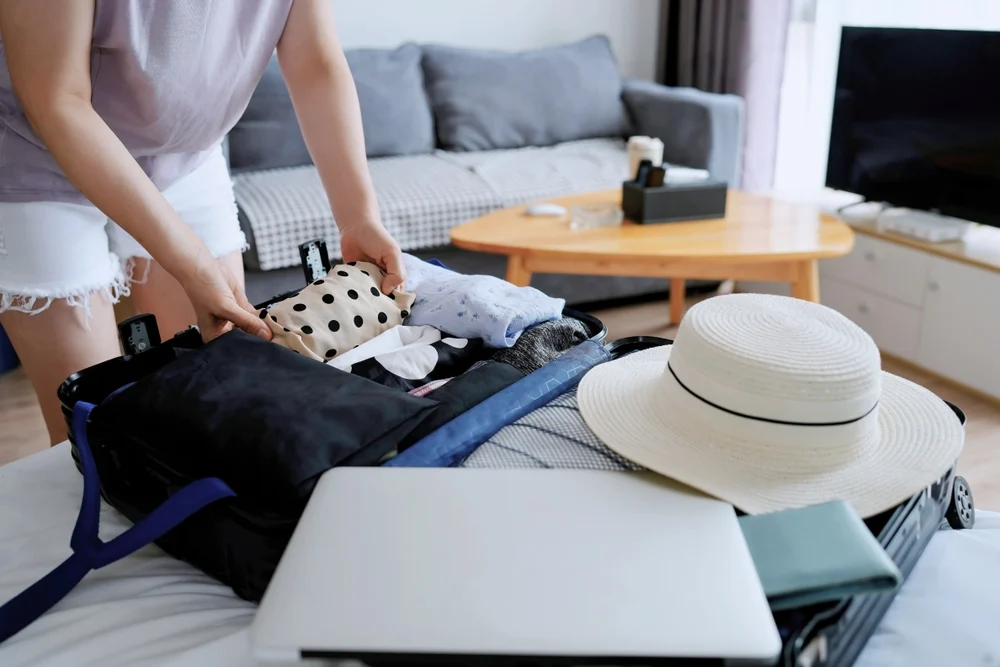
- Set out your personal item bag, open, with pouches in place.
Do this the morning of travel:
- Check your flight status once before you leave home.
- Confirm your ride plan (parking, drop-off, or driver).
- Put your ID and phone in your quick-grab pocket before you step out the door.
If you’re flying within the US, make sure your ID meets current rules. If you’re not sure, review the acceptable identification requirements so you don’t get surprised at the checkpoint.
Document kit that prevents last-minute panic
Your goal is access without chaos. You should be able to show what you need in seconds, even if you’re tired, rushed, or wearing reading glasses.
Pack a small document kit with:
- ID or passport (and any visas if your trip requires them)
- Known Traveler Number details (if you use TSA PreCheck or Global Entry)
- Printed itinerary (flight, hotel, transfer info)
- Hotel address and phone number (printed, not just in your phone)
- Emergency contact card (name, phone, relationship, and a medical note if needed)
- Travel insurance details (policy number and contact)
- A pen (immigration forms always appear when you least want them)
Use the two-place rule: one prime spot (a zip pocket you always use) and one backup spot (a separate inner pocket). The backup is for a paper copy, not your primary ID.
Name match tip: your ticket name must match your ID. If you’ve changed your name, confirm the reservation uses your current legal name. If your passport is in your prior name, resolve it well before travel. For more habits that protect your paperwork, read Secure your travel documents on solo trips.
Money and tech essentials that keep you moving
Airport time disappears when you’re digging for the right card or trying to remember a password. Set yourself up so you can pay, tip, and move on.
Bring:
- One primary credit card
- One backup card (stored separately)
- A small amount of cash
- A few coins (useful for quick tips or small purchases)
Security line trick: keep your “airport wallet” simple. One card, ID, and maybe a $20. Everything else stays zipped away until you’re settled at the gate.
Phone must-dos:
- Charge to 100 percent, then top it off in the car if you can
- Pack a power bank and a short charging cable
- Download the airline app and sign in
- Save your boarding pass to your phone wallet
- Download offline maps for your destination
- Turn on Medical ID (allergies, meds, emergency contacts)
- Set up emergency sharing or family contacts, so someone can help if you’re stuck
If your phone is your key, your ticket, and your map, treat battery life like you treat your passport.
Meds and health comfort you should always keep in your personal item
Never check anything you can’t replace quickly. Checked bags get delayed. Airports close. Pharmacies aren’t always open when you land. Your personal item is your health safety net.
Build one small pouch that stays with you on every trip. When you always pack it the same way, you’ll stop second-guessing yourself.
A few TSA-friendly reminders (without getting in the weeds): keep liquids together in a clear bag, keep labels when you can, and don’t toss mystery powders loose in your purse. If something looks like powder (even a supplement), label it and keep it in its original packaging when possible.
For a bigger picture approach to staying well while you travel, keep Staying healthy on solo trips after 50 in your bookmarks.
Prescription meds, OTC basics, and a mini health file
Pack prescriptions in original bottles when you can. It saves questions later and helps if you need a refill.
Include:
- Prescription meds (carry at least 2 extra days of doses)
- A written med list (name, dose, schedule)
- Allergy list and any major conditions
- Doctor’s name and office phone
- Copies of prescriptions (paper or saved as a PDF)
OTC basics that play well with midlife travel:
- Pain relief (for headaches or sore joints)
- Antacid (airport food happens)
- Anti-nausea option
- Allergy meds
- Electrolyte packets
- Blister pads or moleskin
If you bring powders (electrolytes, collagen, protein), keep them labeled and in a single pouch so you’re not shuffling items at security.
Comfort items that help with dry air, aches, and temperature swings
Cabin air can make you feel like a raisin by hour two. Plan for it, and you’ll arrive calmer. A couple of weeks ago I covered packing a menopause travel kit.
Comfort staples:
- Refillable water bottle (empty until you’re past security)
- Eye drops (dry eyes can hit fast after 45)
- Lip balm and a small hand cream
- Compression socks (helpful on long flights)
- A small scarf or wrap (warmth, pillow, or light blanket)
- A light layer you can remove easily
- Noise-reducing earbuds or earplugs
- A tiny massage ball or foot roller (great during layovers)
Bathroom planning, no drama: pack wipes, panty liners, and a spare pair of underwear in a zip bag. It’s a small step that gives you a lot of peace of mind when delays stack up.
What goes in your personal item: snacks, organization, and a simple packing layout
Your personal item should feel like a well-organized kitchen drawer, not a junk drawer. When everything has a home, you can reach what you need without dumping your whole life onto a bench.
After 45, shoulder and back comfort matter. Choose a lighter bag and keep it under control. If it’s heavy before you leave home, it’ll feel twice as heavy after a long walk to a distant gate.
A personal item packing map you can follow every time
Aim for a lightweight backpack or crossbody that fits under the seat. It should have one easy front pocket and one main compartment that opens wide.
Use this simple layout:
- Quick-grab zone (front pocket): ID, phone, boarding pass access, earbuds, lip balm
- Liquids bag: your clear bag, placed on top so it comes out fast
- Med pouch: one zip pouch, always in the same spot
- Tech pouch: power bank, cable, wall plug
- Comfort pouch: scarf, socks, wipes, hand cream
- Snack pouch: food that won’t crush
Pick 1 to 2 bright zip pouches, so you can spot them in low light. When you’re half-awake at 5:00 a.m., that tiny detail feels like a gift from your past self.
Smart airport snacks for steady energy, less bloat, and fewer cranky moments
Airport food can be pricey, salty, and unpredictable. Packing a few snacks gives you steady energy and helps you avoid the “I’m fine” lie that turns into a headache.
Good travel snacks:
- Protein and fiber: nuts, jerky, tuna pouch, a protein bar
- Easy warm option: instant oatmeal cup (add hot water at a cafe)
- Fresh choices: apple, grapes, or a peeled orange in a container
- Hydration helpers: electrolyte packets (especially if you skip water on flights)
If you swell easily, go easy on very salty snacks the day you fly. Pack gum for ear pressure on takeoff and landing.
If you have dietary needs:
- Gluten-free: nuts, jerky, tuna pouch, labeled bars
- Diabetic-friendly: pair protein with fiber, avoid “candy bars in disguise,” and keep a measured snack within reach
Snacks aren’t just about hunger. They’re about staying level when plans change.
When you use a checklist, airport day stops feeling like a test you didn’t study for. Be prepared with documents, tech, a med kit, smart snacks, and an organized bag.
Save this airport travel checklist where you’ll actually see it, then do a 10-minute pre-flight reset the night before. Your future self will thank you at the gate. What’s your one must-have item for airport day that you won’t travel without?